
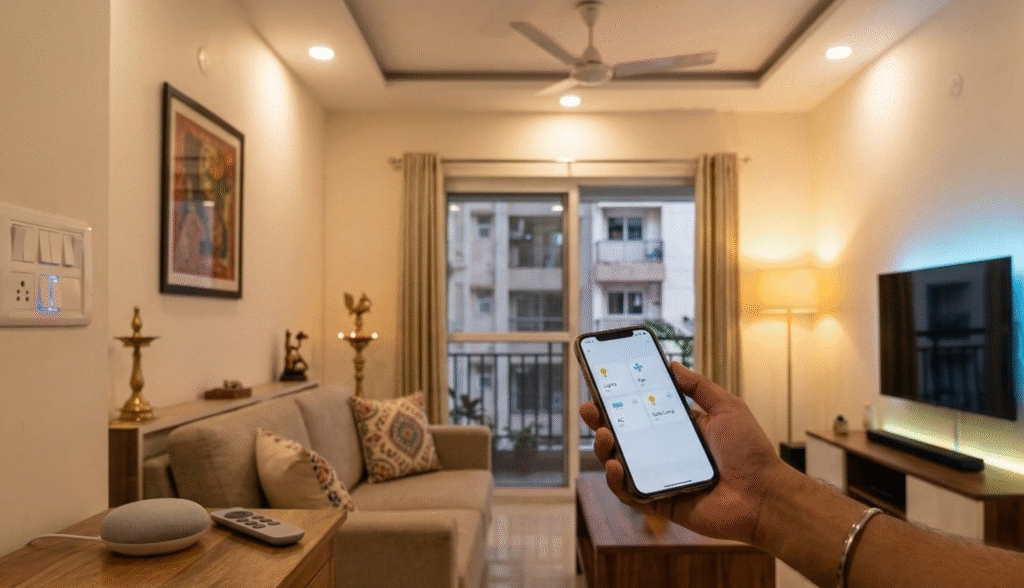
The concept of a “smart home” used to conjure up images of multi-million-dollar mansions equipped with hidden server rooms and complex, hardwired touch panels. It was an intimidating, expensive luxury reserved for the tech-obsessed ultra-rich. Fast forward to 2026, and a profound structural shift has occurred. Smart home technology has democratized. Today, setting up a responsive, automated home no longer requires tearing down walls, hiring specialized electricians, or possessing a degree in computer science.
Thanks to a flood of budget-friendly, highly capable devices and incredibly user-friendly interfaces, anyone—from apartment renters to long-time homeowners—can weave an invisible web of convenience, security, and efficiency into their living space. A smart home today is simply a collection of devices that communicate with one another to anticipate your needs, save you time, and reduce your energy footprint.
However, with thousands of products flooding the market, the sheer volume of choices can cause analysis paralysis. The secret to success isn’t buying everything at once; it’s about strategic, gradual integration. This comprehensive guide will walk you through the exact steps to build a powerful, budget-friendly smart home that perfectly aligns with your real-world lifestyle.
Deconstructing the Modern Smart Home
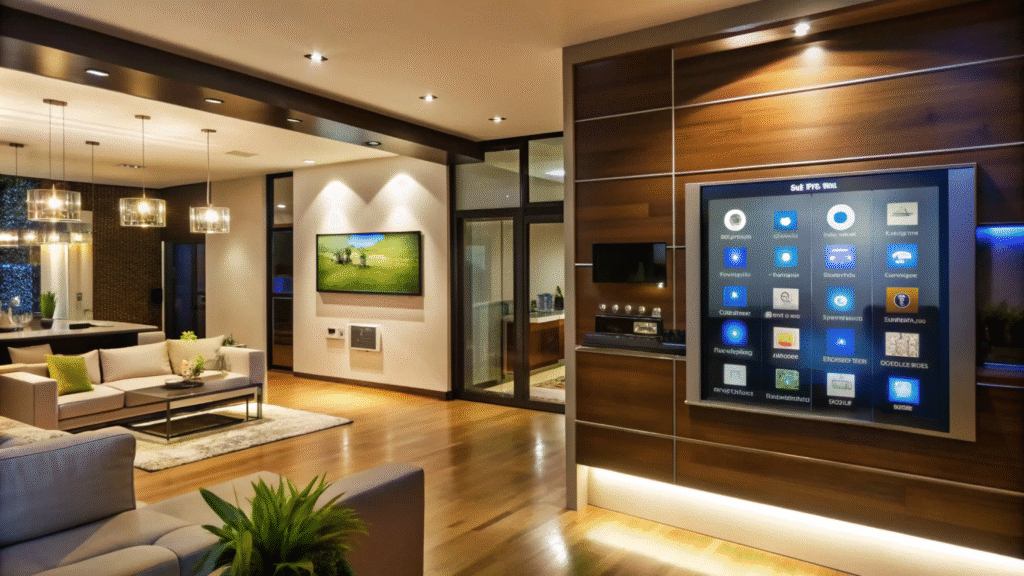
At its core, a smart home is an ecosystem of internet-capable appliances and devices that can be monitored, controlled, and automated remotely or via voice. But in 2026, it is less about “remote control” and much more about ambient computing—a home that responds to your presence and habits without you having to manually press a button.
These devices communicate using various invisible languages. While standard Wi-Fi is common for bandwidth-heavy devices like cameras, modern smart homes rely heavily on low-power, high-efficiency mesh networks using protocols like Zigbee, Thread, and the globally adopted Matter standard. Matter, in particular, has revolutionized the industry by ensuring that devices from different brands can finally talk to each other seamlessly.
The Lean Approach: Why Budget-Friendly is the Best Strategy
There is a common misconception that you need to drop thousands of dollars to get a “real” smart home. In reality, the most effective smart homes are built incrementally.
Adopting a budget-friendly, step-by-step approach prevents you from ending up with a “gadget graveyard”—a drawer full of expensive tech you never use because you didn’t actually need it. Starting small limits your financial risk, gives you the breathing room to understand how automations work, and allows your ecosystem to grow organically alongside your actual daily habits.
Phase 1: Strategy and Foundation

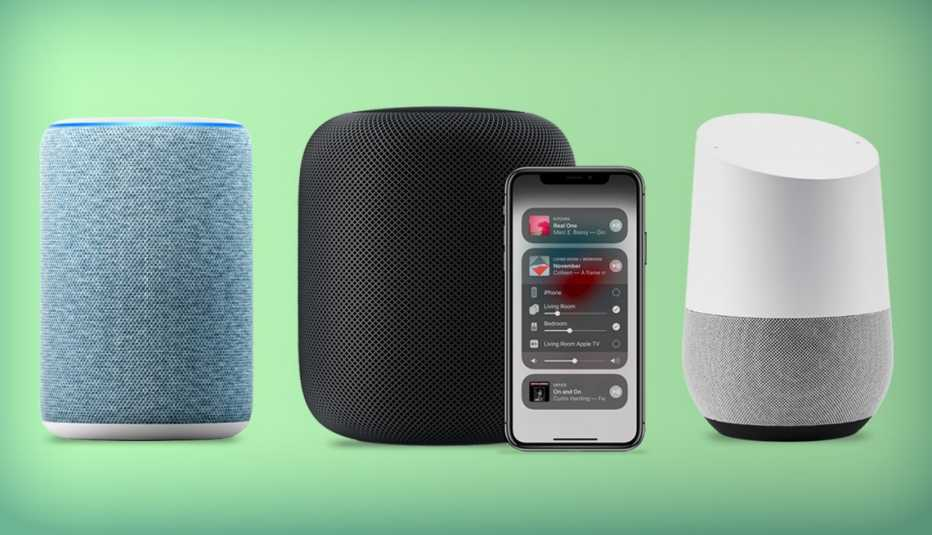
Before buying a single bulb or plug, you must choose your central command center. This is the platform where all your devices will live, allowing them to interact.
While the Matter protocol allows devices to cross boundaries, you still need a primary interface.
Choose one, and make sure every box you buy moving forward explicitly states compatibility with that ecosystem.
The biggest mistake beginners make is walking into an electronics store and buying whatever looks sleek on the shelf. A successful smart home solves your specific problems.
Identifying Your Friction Points
Spend a week observing your daily routines. What micro-tasks annoy you?
- Are you constantly walking back downstairs to check if the front door is locked?
- Do you regularly leave the bathroom exhaust fan running all day?
- Are your energy bills creeping up because the AC runs while the house is empty?
- Do you stumble through a dark hallway when you wake up for a glass of water?
Your answers to these questions will dictate your very first purchases.
Choosing Your Ecosystem
- Google Home: Excellent for natural language processing and answering complex questions.
- Amazon Alexa: Boasts the widest compatibility with third-party budget devices and is highly responsive for shopping and routine building.
- Apple HomeKit: The go-to for privacy-conscious users deeply entrenched in the Apple ecosystem, though compatible devices can sometimes carry a slight premium.
- Samsung SmartThings: A powerhouse for those who want incredibly detailed, complex automations and own Samsung appliances.
Phase 2: The Core Hardware (High Impact, Low Cost)
Once your strategy is set, it’s time to start buying. These foundational categories offer the highest return on investment for beginners.
Smart Lighting: The Gateway Gadget

Lighting is where almost everyone begins, and for good reason—it completely changes the ambiance of your home in minutes.
- Beyond On/Off: Modern budget smart bulbs allow you to tune the “temperature” of the light. You can program crisp, blue-white light at 8:00 AM to boost focus, transitioning automatically to warm, amber light at 9:00 PM to help your brain produce melatonin for sleep.
- Security: By creating an “Away Mode” routine, your lights will mimic your usual evening behavior while you are on vacation, making the house appear actively occupied.
- Energy Savings: LED smart bulbs consume a fraction of the energy of traditional bulbs, and setting them to turn off automatically when your phone leaves the house eliminates wasted electricity.
Smart Plugs: Upgrading “Dumb” Appliances
Smart plugs are the unsung heroes of the budget smart home. These affordable adapters plug directly into your standard wall outlets, and your traditional appliances plug into them.
- Instant Upgrades: Turn a 10-year-old coffee maker into a smart appliance that starts brewing the moment your morning alarm goes off.
- Safety: Worried you left the curling iron or space heater on? A quick tap on your phone cuts the power instantly.
- Vampire Power: Many smart plugs now monitor energy usage, allowing you to identify and cut power to devices that drain electricity even when turned off.
The Smart Speaker: The Brain of the House
While mobile apps are great for setup, pulling out your phone to turn on a light quickly becomes tedious.
A budget smart speaker (like an Echo Dot or Nest Mini) serves as the acoustic hub of your home.
Voice control is what makes a smart home feel truly frictionless. You can group devices so that a single command like, “Goodnight,” locks the doors, turns off the interior lights, lowers the thermostat, and plays white noise in the bedroom.
Phase 3: Enhancing Comfort and Security
Once you are comfortable with basic controls, it’s time to tackle the two elements that add the most tangible value to your property: security and climate control.
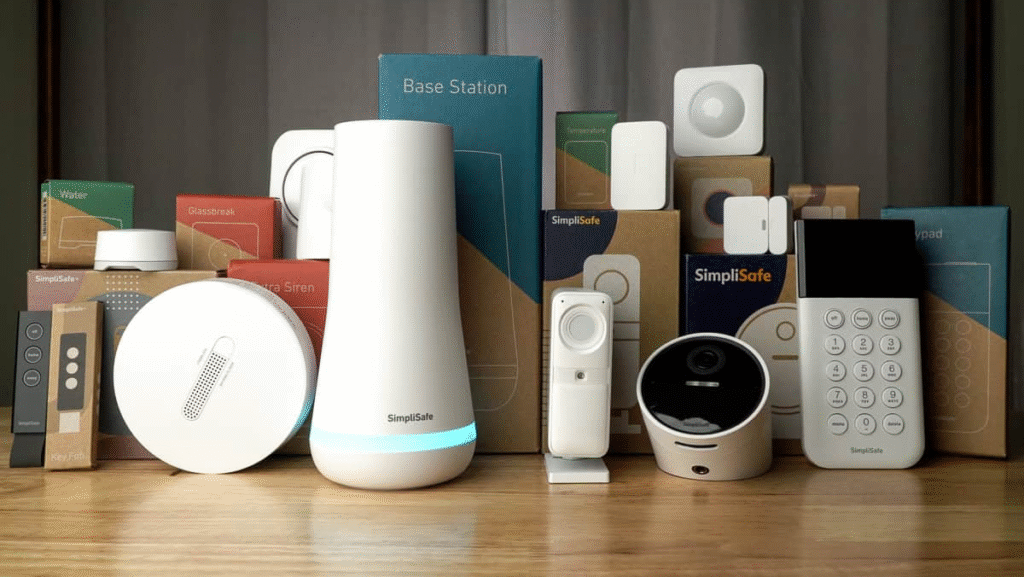
Next-Generation Security on a Budget
You no longer need a monthly subscription and hardwired sensors to protect your home.
- Video Doorbells: These are essential for modern package delivery. They offer two-way audio, allowing you to tell a courier where to hide a box, and use AI to differentiate between a passing car, an animal, and a human.
- Smart Locks: The era of hiding a spare key under a fake rock is over. Smart locks let you generate temporary digital keys for housekeepers, dog walkers, or visiting family, which expire automatically after a set time. You also get a log of exactly when the door was opened and by whom.
- Contact Sensors: These tiny, inexpensive magnetic sensors stick to doors and windows. If a window is opened while the system is armed, you get an instant push notification.
Thermostats: The Investment That Pays for Itself
Heating and cooling represent the largest utility expense in most households. A smart thermostat is perhaps the only smart device that actively pays you back.
- Geofencing: Using the location of your smartphone, the thermostat knows when you have left for work and allows the house temperature to drift, saving energy. When it detects you are a mile away on your commute home, it kicks back on, ensuring the house is perfect when you walk through the door.
- Algorithmic Learning: The best models learn how long it takes your specific HVAC system to heat your home based on the weather outside, optimizing run times to save you money without sacrificing comfort.
The Art of Automation: Making the Home Work for You
A home isn’t truly “smart” if you are just using your phone as a glorified remote control. The magic lies in Automations (sometimes called Routines). This is when devices trigger one another without human intervention.
- The “Morning Routine”: Triggered by your phone alarm. The bedroom lights fade up to 30% over 10 minutes, the thermostat warms the house by 3 degrees, the smart plug turns on the espresso machine, and your smart speaker softly reads your calendar events for the day.
- The “Movie Time” Routine: Triggered by a voice command. The living room overhead lights turn off, LED bias lighting behind the TV turns a dim cinematic blue, and the smart blinds lower to block out the streetlights.
- The “Sensory” Routine: A motion sensor in the hallway detects movement between 12:00 AM and 5:00 AM. It triggers the bathroom light to turn on at only 5% brightness and a deep red color, providing enough light to see without blinding you or waking up your partner.
Infrastructure: Securing Your Digital Castle
As you add internet-connected cameras, locks, and microphones to your most private spaces, cybersecurity cannot be an afterthought. In 2026, securing a smart home is easier, but it requires active participation.
- The Router is the Front Door: Your ISP-provided router from five years ago won’t cut it. Upgrade to a modern Wi-Fi 6 or Wi-Fi 7 mesh router. This provides the bandwidth necessary to keep dozens of devices connected without dropping offline.
- Segregate Your Network: Most modern routers allow you to create a “Guest Network” or an “IoT (Internet of Things) Network.” Put all your smart home devices on this separate network. If a hacker manages to compromise a cheap smart bulb, they will be quarantined and unable to access your main network where your laptops, banking apps, and personal files live.
- Authentication: Enable Two-Factor Authentication (2FA) on every single smart home app, especially your security cameras and smart locks.
- Updates: Set all devices to update their firmware automatically. Manufacturers constantly patch security vulnerabilities; you don’t want to run obsolete software on the lock that guards your front door.
The 2026 Horizon: AI and the Future of the Home
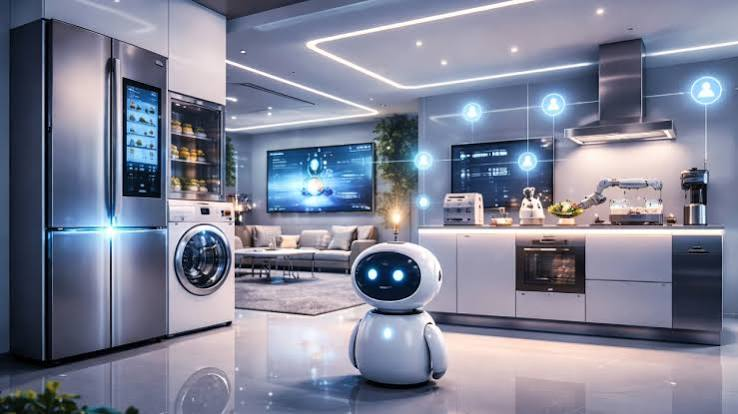
As we navigate through 2026, the integration of Artificial Intelligence is pushing smart homes past simple “if this, then that” commands. We are entering the era of the predictive home.
Modern AI engines are learning to anticipate needs based on historical data. If the AI notices that you always manually override the thermostat to 72 degrees when the humidity spikes outside, it will simply start doing it for you. If a security camera spots an unrecognizable vehicle lingering in your driveway at 3 AM, AI can automatically flash your exterior lights and send a flagged alert to your phone, distinguishing the event from a raccoon wandering through the yard.
Furthermore, sustainability is a massive driving force. Smart homes are now integrating with local utility grids, automatically running high-draw appliances (like dishwashers or EV chargers) during off-peak hours when electricity is cheapest and greenest.
Building at Your Own Pace
The journey to a smart home is exactly that—a journey. There is no prize for automating your entire house in a single weekend. By starting with a clear budget, focusing on the friction points in your daily routine, and insisting on ecosystem compatibility (like looking for the Matter badge), you can build a highly sophisticated, deeply personalized smart home.
You are not just buying gadgets; you are buying back your time, securing your peace of mind, and creating a living space that actively takes care of the people inside it. Start small, experiment with routines, and let your home evolve alongside you.
FAQ’S
1. What is a smart home?
A smart home uses connected devices to automate and control everyday household tasks.
2. What is the best smart home device for beginners?
Smart bulbs and smart plugs are affordable, easy to install, and ideal for beginners.
3. Can I build a smart home on a budget?
Yes, you can start with a few basic devices and expand your setup over time.
4. Do smart home devices save energy?
Yes, smart lighting, plugs, and thermostats can help reduce energy consumption.
5. Is a smart home secure?
Yes, with strong passwords, regular software updates, and a secure Wi-Fi network, smart homes can be safe to use.